
Few settings put the horse-welfare question so sharply as competitive sport.
Few settings put the horse-welfare question so sharply as competitive sport. Here the will to perform at the highest level meets the horse's basic needs – two forces that are not always compatible.
The technique of pressing the horse's head and neck in towards the chest, known as rollkur or hyperflexion, has been contested for more than twenty years. A large systematic review of the evidence showed that of 58 peer-reviewed, independent studies of hyperflexion, the overwhelming majority found welfare consequences, with 28 studies specifically concluding that welfare was impaired. Only a single study, by a Dutch researcher in 2006, found the technique potentially beneficial, in a comparison of elite horses and leisure horses.
The researcher Paul McGreevy has stated that hyperflexion causes airway obstruction, pathological tissue changes in the structures of the neck, impaired forward vision, stress and pain. The FEI's own position has shifted over time: in 2008 the federation's welfare committee withdrew its support for the practice and stated that hyperflexion in all horse sport was an example of mental abuse. Despite this, in 2010 the FEI chose to redefine hyperflexion as neck flexion achieved through aggressive force, rather than banning the technique as such – which moved the focus from the head–neck position itself to how it is obtained.
Despite the rules, the problem remains in practice. Dutch biomechanics researchers have shown that riding with the head behind the vertical was considerably more common in the 2008 World Championship dressage classes than at the 1992 Olympics – the 15 best-placed horses in 2008 held the head behind the vertical for more than 50 per cent of the time, on average, in the four classical dressage paces, compared with only two of the paces for the equivalent horses in 1992.
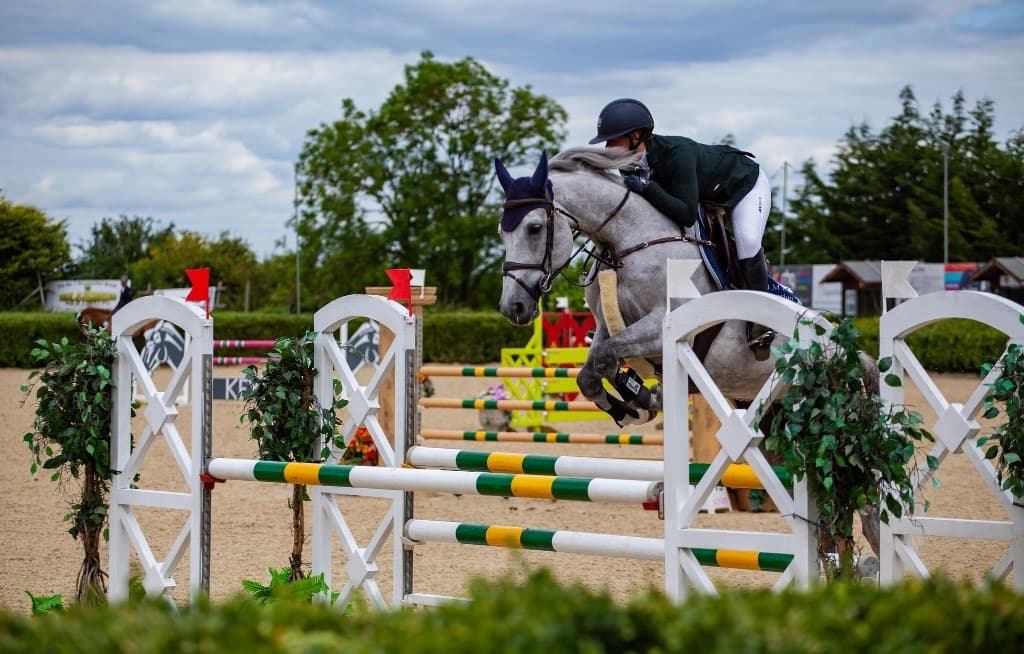
In showjumping the rules have become more detailed around aids: riders must not whip the horse on the head, not whip more than three times in succession, not cause bleeding with the whip, not whip after being eliminated, and not whip 'to vent their own frustration'. Accredited FEI veterinarians inspect horses before and after competition for signs of abuse, including abnormal sensitivity in the legs, in both jumping and endurance.
The FEI has set up a broad programme of measures: a review of the federation's Equine Welfare Strategy Action Plan shows that it comprises 37 concrete actions, of which 26 are grouped into six focus areas – including training methods and competition equipment such as bits, nosebands, spurs and double bridles – while the remaining actions are overarching.
At the same time the debate shows that confidence in the rulebook is being questioned from inside the sport. Ahead of the 2026 rule revision, Poland has lobbied to add hyperflexion to the list of prohibited methods in the FEI regulations, but the FEI has declined, citing a wish to wait for ongoing working groups and studies before any changes are made.
A British focus-group study with people in horse sport identified the conflict between the demands of competition and the horse's needs as a key welfare issue, while participants felt that the term 'quality of life' was preferable to 'welfare', because the latter word had acquired negative connotations. The same study found that participants believed improved general handling and training of horses would likely make a greater difference to welfare than changes to competition rules alone.
At Hästannons we believe welfare and responsible ownership belong together – whether you buy, sell, breed or ride. Read on in the series, and in our practical guides.
A majority of independent studies point to negative welfare consequences – airways, neck, stress and pain.
People in the sport argue that better everyday training and handling would likely make a greater difference than rule changes alone.
The FEI has a substantial Equine Welfare Strategy Action Plan, with measures on training, equipment and competition tack.