
How to sell your horse property to the right buyer at the right price: lead with the equestrian assets, get the paperwork in order, present the place with professional photos and film, and choose the right way to reach horse-minded buyers.
A horse property is not sold like an ordinary house. Buyers want the whole picture – stables, land, grazing, somewhere to ride, and the feeling that the horses could move in tomorrow. Spell out the equestrian value and keep the paperwork tidy, and you will find the right buyer faster, at a price that holds.
What draws a horse buyer is rarely what sells a family house. Put the horse-keeping at the centre of the story: stables, boxes, paddocks, grazing, indoor school, outdoor arena and access to riding country. Describe how the place actually works through the seasons.
A serious buyer wants to see that everything is in order. Have planning permission, completion certificate, permits and running-cost figures ready before the first viewing. It builds trust and carries the sale more smoothly all the way to contract.
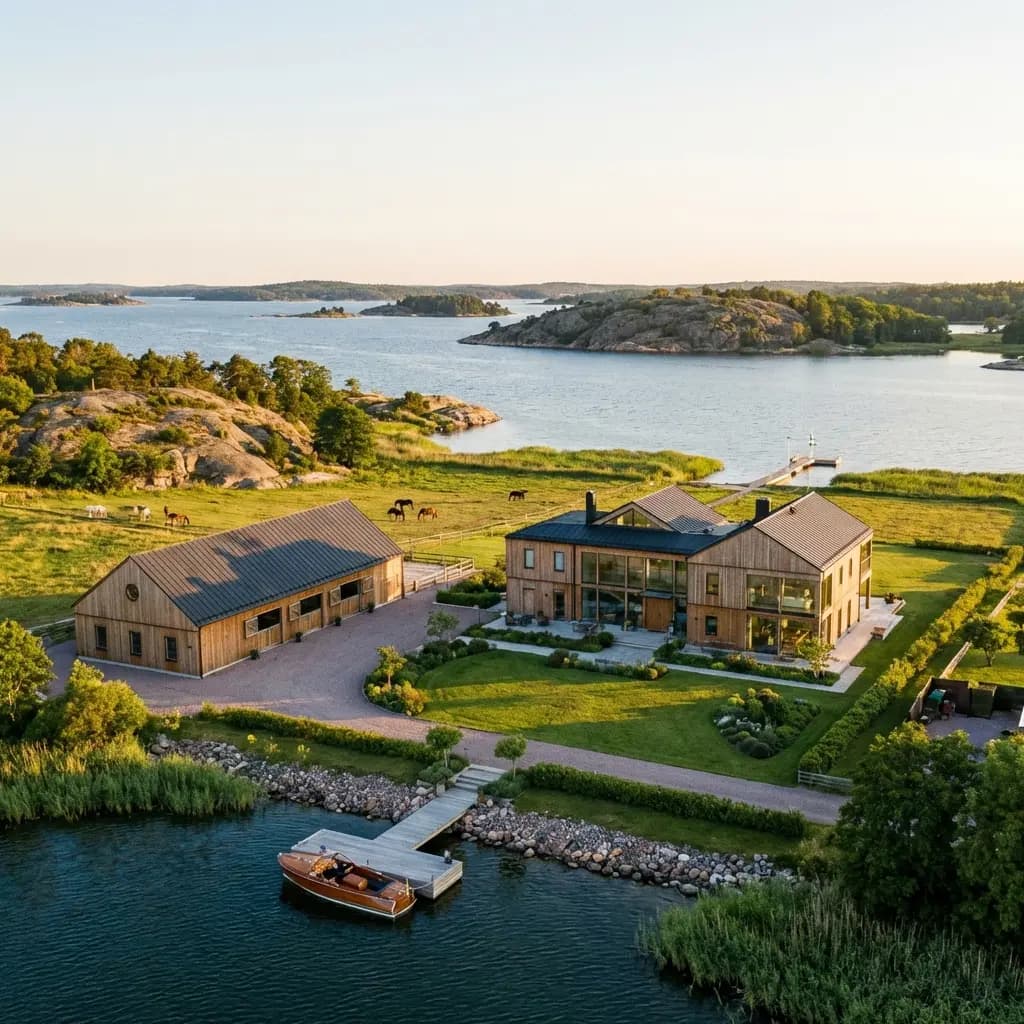
Photographs sell the farm. Shoot on a bright day, when the grass is green, the paddocks are mown and the yard is tidy. Show both the house and the equestrian set-up, and add drone shots that reveal the scale of the land and how buildings and fields sit together.
A horse property is priced on location, land, the condition of the buildings and the equestrian facilities. Bring in an estate agent who actually knows farms and horse properties – they reach the right buyers and can value the yard properly. Decide, too, whether you want the open market or a more specialised horse audience.
At the viewing, let the buyer feel ordinary working life. Show how the horses are looked after, how forage and manure are handled, and how the place runs day to day. Be honest about what needs maintaining. Close with a clear purchase contract that sets out every permit and everything included in the sale.
It is strongly advisable to choose an agent with experience of farms and horse properties. They can value the equestrian facilities properly, handle the legal side of agricultural holdings, and put the place in front of the right buyers.
Planning permission and completion certificate for the buildings, manure-handling permits, acreage figures, easements and joint property associations, details of water and sewage, plus a summary of running costs. Have it all in place before the first viewing.
Shoot on a bright day with green grass and tidy surfaces. Show the whole picture – house, stables, boxes, paddocks and indoor school – and add drone shots that show the acreage. A short walk-round film helps buyers who are travelling a long way.
Location, the extent and quality of the land, the condition of the buildings, and the equestrian facilities: stables, boxes, grazing and indoor school. Have a specialist rural estate agent value the whole package, and compare with properties sold in the region.
A horse property is often assessed as a lantbruksenhet (agricultural holding), which can mean parts of it are taxed as a näringsfastighet (business property) rather than a privatbostad (private home). That affects how the capital gain is calculated and taxed. Settle the classification and run the numbers with your agent or accountant before you sell.